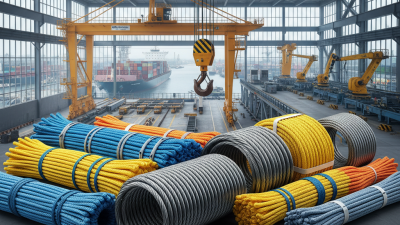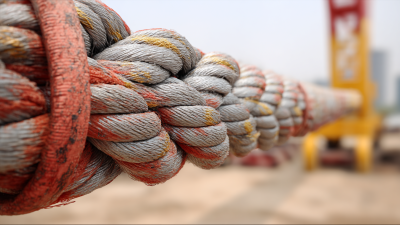
Industrial Crane Rope is the working link between a crane’s hoist system and its load. It carries weight, absorbs repeated bending, and operates under changing tension. A damaged rope can show broken wires, flattened strands, corrosion, or unusual diameter loss. These signs often appear before a serious failure, but they are easy to overlook during busy operations.
This guide explains what Industrial Crane Rope is and how its construction affects crane performance. Common choices include rotation-resistant rope, compacted strand rope, and standard multi-layer wire rope. Each type suits different lifting heights, drum designs, load patterns, and safety requirements. Rotation-resistant rope helps control twisting on long lifts. Compacted strand rope can offer improved fatigue resistance and a smoother drum profile. Standard rope may remain practical for simpler applications.
There is no single best rope for every crane. That answer sounds convenient, but it is incomplete. Selection should consider working load, sheave diameter, drum arrangement, reeving method, lifting speed, and outdoor exposure. In real maintenance work, a rope that looks strong may still perform poorly on an undersized sheave. Manufacturer data and inspection records matter. So does the operator’s experience.
We will compare rope types, construction features, inspection points, and selection criteria. Clear examples will connect technical details with workshop decisions. The goal is not to recommend the most expensive option. It is to identify a reliable rope for the crane, the load, and the working environment. Small details matter. Sometimes, they decide everything.
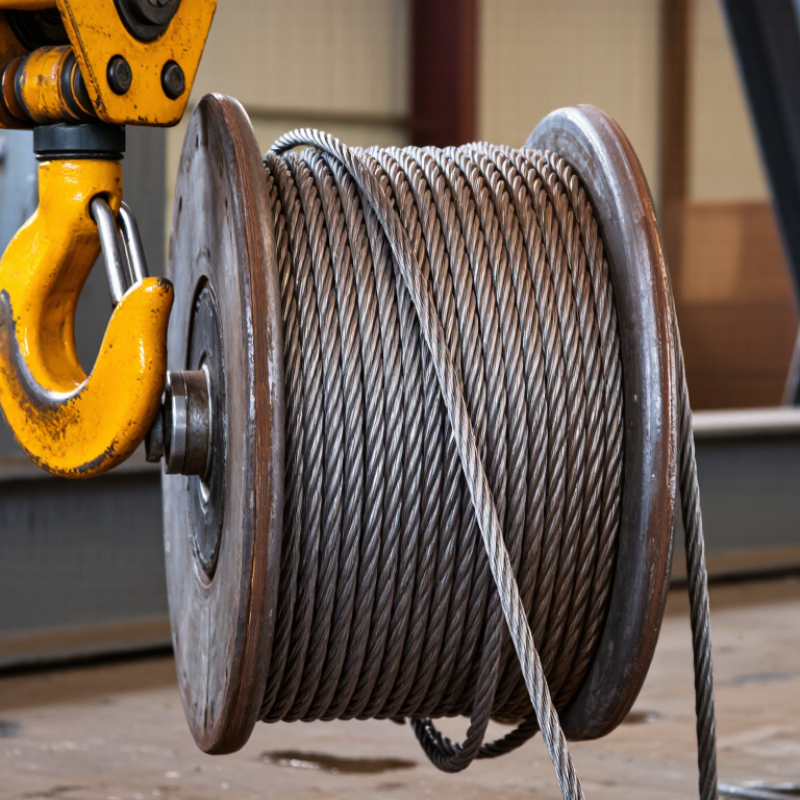
An industrial crane rope is a flexible lifting component made from many steel wires twisted into strands. These strands wrap around a central core, creating a strong rope that can carry heavy loads. It transfers force between the crane drum, sheaves, and lifted equipment. The rope also bends repeatedly during daily operation. That bending causes internal fatigue, even when the surface appears clean.
A suitable rope depends on load weight, lifting speed, drum size, sheave diameter, and working environment. Fiber-core ropes offer flexibility, while steel-core ropes usually provide greater crushing resistance and strength. Rotation-resistant designs can improve control during long lifts. However, no rope type is best for every crane. Real selection is less simple than many product charts suggest.
Tips: Check for broken wires, flattened sections, corrosion, kinks, and unusual diameter loss before use. Keep the rope properly lubricated with a product approved for wire rope service. Record inspection findings, not just replacement dates. A qualified person should assess serious damage and follow the crane manufacturer’s instructions. In busy workshops, small defects are easy to miss. That is worth remembering.
| Rope Type | Typical Construction | Main Characteristics | Best-Suited Crane Applications | Relative Flexibility | Rotation Resistance | Overall Suitability |
|---|---|---|---|---|---|---|
| Rotation-Resistant Rope | Multiple layers of strands laid in opposite directions around a core | Controls spinning and torque under suspended loads; requires correct installation and reeving | Tower cranes, mobile cranes, telescopic cranes, and high-lift operations with long falls | Medium | Excellent | Best for anti-spin lifting |
| Compacted-Strand Rope | Strands compressed or compacted to create a smoother outer surface | Higher metallic area, strong breaking force, improved resistance to crushing and abrasion | Heavy-duty hoists, high-capacity cranes, and multi-layer drum systems | Medium | Good to excellent, depending on construction | Best for high strength and drum durability |
| Rotation-Resistant Compacted Rope | Compacted strands combined with a rotation-resistant multi-layer design | Combines high strength, reduced rotation, and improved resistance to fleet-angle and drum wear | Modern heavy-lift cranes, deep hoisting systems, and demanding production lifting | Medium | Excellent | Best for demanding heavy-duty service |
| Rotation-Resistant 19×7 Rope | Six outer strands around a multi-strand center, commonly arranged to reduce torque | Good resistance to spinning with a relatively flexible design; may be sensitive to crushing and incorrect handling | General crane hoisting where rotation control is required and drum conditions are moderate | Good | Very good | Good general-purpose option |
| Rotation-Resistant 19×19 Rope | More wires and smaller outer wires than a 19×7 construction | Greater flexibility and bending-fatigue resistance, with less resistance to severe crushing than compacted designs | Cranes with frequent sheave cycles and applications prioritizing flexibility | Very good | Very good | Best where repeated bending is critical |
| Regular-Lay 6×19 Rope | Six strands, typically with a fiber or independent wire rope core | Widely used, economical, and abrasion-resistant; not intended for applications requiring strong rotation control | Basic hoists, winches, and applications with short lifts and controlled loading | Medium | Low | Suitable only when rotation is not a concern |
| Regular-Lay 6×36 Rope | Six strands containing more, smaller wires than a 6×19 construction | Flexible and suitable for repeated bending; generally less abrasion-resistant than coarser-wire constructions | Cranes and hoists operating over sheaves with frequent bending cycles | Very good | Low | Useful for flexible, non-rotating service |
| Stainless Steel Wire Rope | Corrosion-resistant steel alloy wires in a suitable rope construction | Improved corrosion resistance in wet or chemically exposed environments; strength and fatigue performance depend on grade and construction | Marine, food-processing, outdoor, and corrosive environments when compatible with the lifting equipment | Depends on construction | Depends on construction | Best for corrosion exposure, not automatically for heavy lifting |

Industrial Crane Rope: How It Works and What It Is Made Of
An industrial crane rope is usually a steel wire rope built to lift, lower, and position heavy loads. It contains individual steel wires twisted into strands. Several strands wrap around a core, creating the complete rope. The core supports the strands and helps the rope keep its shape under pressure. A fiber core offers flexibility, while a steel core provides greater crushing resistance. During lifting, the rope bends around sheaves and winds onto a drum. Every bend creates stress. Repeated bending can slowly cause wire fatigue, even when the rope looks clean.
The best rope type depends on load weight, lifting speed, drum design, and bending frequency. Rotation-resistant construction can improve control when loads must remain steady. Galvanized wires can offer stronger corrosion resistance in damp working areas. Lubrication reduces friction between wires and helps protect the internal surfaces. Still, lubrication cannot repair damage. A rope may appear healthy and still be tired inside. That detail is easy to overlook.
Tips: Match the rope diameter to the crane manufacturer’s specifications and the actual sheave size. Inspect for broken wires, flattened sections, birdcaging, rust, and unusual diameter loss. Feel for stiff spots carefully, but never rely on touch alone. Keep inspection records with dates, operating hours, and observed changes. If the rope’s condition seems uncertain, remove it from service and request a competent evaluation. Small warning signs matter.
Industrial crane ropes are selected by load direction, drum design, lifting height, and operating speed. No single rope construction suits every crane. The wrong choice may create rotation, crushing, or uneven wear around sheaves.
Rotation-resistant ropes are common for single-part and multi-part lifts where the load must remain stable. They contain several layers arranged to balance torque. Non-rotating ropes offer stronger resistance to load twisting, especially during tall lifts with freely hanging loads. They require careful installation and controlled handling.
Regular lay ropes are often practical for general lifting work. Their wires run in the opposite direction from the strands, which improves handling and resists crushing on many drums. Lang lay ropes place wires and strands in the same direction. They usually provide better flexibility and wear resistance, but their ends need secure termination.
Compacted ropes have smoother surfaces and greater metallic area. They can reduce contact pressure, although their performance depends heavily on correct sheave dimensions.
During inspections, look for broken wires, flattened sections, corrosion, birdcaging, and diameter loss. Small surface damage can hide deeper fatigue. That is easy to underestimate.
Rope grade, construction, and lubrication should match the crane manufacturer’s specifications and the site’s lifting cycle. A selection table helps, but it cannot replace an experienced inspection. Even trained teams sometimes focus on visible damage and miss drum spooling problems. That judgment deserves another review.
Industrial crane rope selection depends on the lift, not just the rated capacity. For general overhead crane work, 6x36 regular-lay wire rope offers useful flexibility around sheaves. Its many smaller wires can reduce bending fatigue during repeated lifting. A 6x19 construction has fewer, larger wires and usually resists abrasion better. It can suit slower hoisting with heavier contact on drums and sheaves. Neither type is automatically best.
Rotation-resistant rope is valuable when the load hangs from a single fall and can spin freely. It helps control twisting during long lifts, especially with narrow or suspended loads. However, it needs careful handling and correct end termination. Poor installation can damage its internal structure before the first serious lift. That detail is often underestimated. Compacted rope may provide stronger resistance to crushing on multilayer drums. It can also offer a smoother contact surface, but its performance depends on compatible sheave grooves.
For outdoor lifting near salt spray, corrosion-resistant construction may be more suitable, provided the rope matches the crane’s design and inspection schedule. Lang-lay rope can improve fatigue resistance, yet it may be less forgiving when rotation or poor reeving occurs. Check drum diameter, sheave condition, fleet angle, lubrication, and actual lift cycles before choosing. A rope that looks oversized can still wear quickly on a damaged groove. Maintenance records should guide later decisions. My view is practical: select the rope type, then verify its behavior through measured wear, broken-wire patterns, and controlled inspections.
Common wire-rope constructions and their typical application suitability
Six-strand ropes such as 6×19 and 6×36 are widely used for general lifting. The 6×36 construction offers greater flexibility, while 18×7 and 35×7 rotation-resistant ropes are better suited to single-part or multi-part lifting systems where rotation control is important. Compact strands and rotation-resistant designs should always be selected according to the crane manufacturer’s requirements, load pattern, drum arrangement, and applicable lifting standards.
What Is an Industrial Crane Rope What Types Are Best?
An industrial crane rope is a steel wire rope that lifts, lowers, and positions heavy loads. Its construction affects strength, flexibility, rotation, and service life. Select the rope from the crane’s load chart, drum size, sheave diameter, and reeving pattern. A flexible rope suits frequent bending. A rotation-resistant rope helps control suspended loads. Do not choose by diameter alone.
Inspect the rope before each shift. Look for broken wires, crushed sections, birdcaging, corrosion, kinks, and unusual diameter loss. Check areas near end fittings and sheaves carefully. They often wear first. Run a clean cloth along the rope, but wear suitable gloves. Never use bare hands. A trained inspector should measure damage and compare it with the equipment manual and approved inspection criteria. One missed defect can change the lifting risk.
Maintenance starts with clean sheaves and correctly aligned drums. Remove dirt before applying compatible rope lubricant. Too much lubricant can hide broken wires. Keep the rope properly spooled under controlled tension. Avoid sudden side pulls and shock loading. Record inspection dates, findings, lubrication, and replacements. These records reveal gradual wear more clearly than memory. I have seen teams inspect carefully, then ignore poor spooling. That mistake deserves another look. When doubt remains, remove the rope from service and request a competent evaluation. 恒一