Leave Your Message

How to Choose the Best Oilfield Ropes for Global Sourcing?

Selecting the right Oilfield Ropes for global sourcing demands more than comparing prices and breaking strengths. Offshore operations expose ropes to saltwater, ultraviolet light, mud, chemicals, and repeated shock loading. A rope that performs well on a dry test bench may fail early on a wet deck. That difference matters.

“Choose the rope for its complete working environment, not its catalog strength alone,” says offshore rope engineer Mark Ellison. His point is practical. Buyers should examine construction, fiber type, diameter, splice quality, minimum breaking load, working load limit, and fatigue resistance. Polyester may suit stable mooring applications. High-modulus polyethylene can reduce weight, but it demands careful protection against heat and abrasion. Steel wire rope remains valuable where crushing resistance and high tensile force dominate.

Global sourcing adds another layer. A dependable supplier should provide batch traceability, inspection records, material certificates, and clear testing methods. Ask how the manufacturer measures strength after cycling, not only before use. Review storage instructions, replacement intervals, and emergency support. A low quotation can become expensive after premature wear, delayed delivery, or unsuitable splicing.

Field experience also teaches humility. Specifications do not reveal every deck condition. Crew handling, sharp edges, bending radius, and poor storage can change performance quickly. Even a well-designed purchasing spreadsheet may miss these details. Therefore, this guide compares Oilfield Ropes through application demands, supplier reliability, lifecycle cost, and documented performance. The best choice is rarely the cheapest one. It is the rope that remains predictable when the operation becomes difficult.
How to Choose the Best Oilfield Ropes for Global Sourcing?

Define Oilfield Rope Types and Their Intended Applications

How to Choose the Best Oilfield Ropes for Global Sourcing?

Define Oilfield Rope Types and Their Intended Applications

Oilfield ropes are not interchangeable, even when their diameters look similar. Wire rope is common for drilling lines, cranes, winches, and lifting systems. Its steel strands provide high tensile strength and predictable performance under heavy loads. However, corrosion, crushing, and fatigue can shorten its service life.

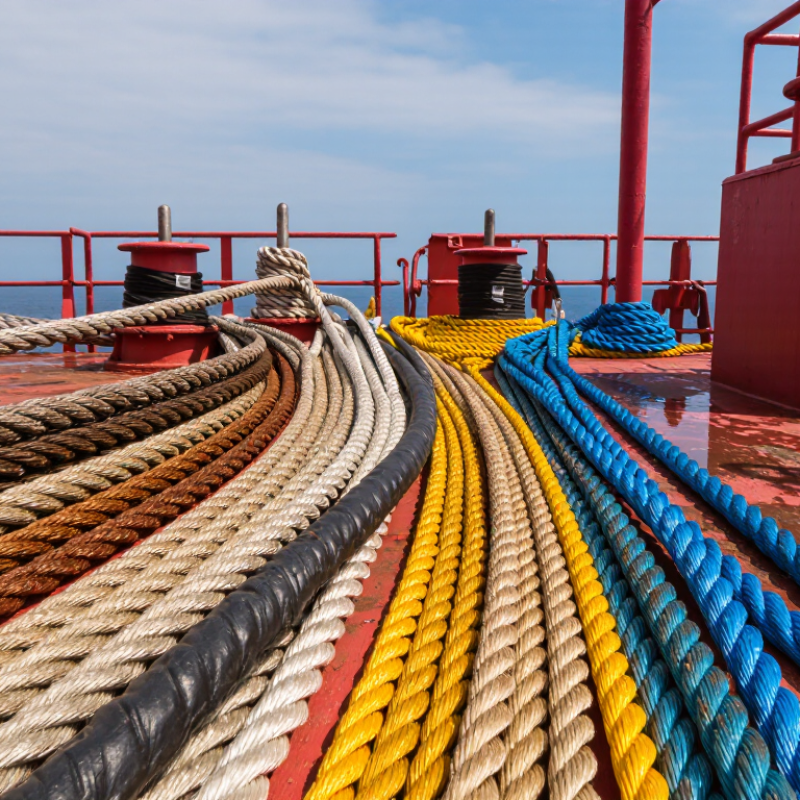
Synthetic ropes suit selected offshore, mooring, towing, and handling applications. They are lighter than steel rope and easier to transport across remote sites. Their flexibility also reduces handling effort. Yet heat, abrasion, ultraviolet exposure, and chemical contact require careful evaluation. A synthetic rope can appear healthy while its inner fibers are damaged. That is easy to miss.

Fiber ropes serve lighter-duty tasks, including guide lines, utility handling, and temporary positioning. They should not replace lifting ropes without verified load data. Each rope needs a defined application, working load limit, safety factor, and inspection routine. The buyer should also review elongation, rotation resistance, splice quality, and end termination.

In practical sourcing, I would request test certificates, construction details, material specifications, and traceable inspection records. Sample testing is valuable when equipment will operate offshore or in harsh weather. I once underestimated how quickly mud and salt could affect rope handling. That small assumption created unnecessary inspection work. Supplier claims deserve verification through documented tests and realistic operating conditions.
Match Rope Materials to Load, Environment, and Operating Conditions

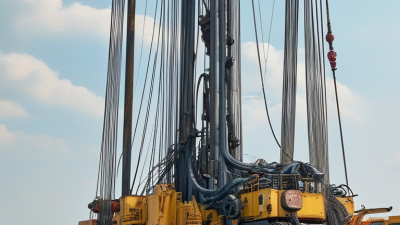
Oilfield rope selection starts with the load, not the catalogue. A static lifting line may need high-strength steel wire rope, while a flexible workover line may require fatigue resistance. Check the working load limit, shock loading, bending cycles, and required safety factor. A rope that survives one heavy pull may still fail after thousands of movements.

Saltwater changes everything. Steel wire rope offers excellent strength, but moisture, drilling fluids, and salt can accelerate corrosion. Galvanized or corrosion-resistant constructions may perform better when inspection access is limited. Synthetic ropes reduce weight and simplify handling. However, abrasion, heat, UV exposure, and sharp edges can damage fibers quickly. Nylon stretches under load, while polyester offers lower elongation. High-modulus polyethylene can provide strong, lightweight performance, but it needs careful control around heat and friction.

Operating temperature also matters. A rope near hot equipment faces different risks than one working in cold seawater. Confirm compatibility with hydraulic oils, solvents, mud additives, and cleaning chemicals. Ask for test certificates, construction details, batch traceability, and inspection guidance. Field teams should record broken wires, flattened strands, diameter loss, glazing, and core exposure. Fit matters. In practice, procurement teams sometimes select impressive breaking strength and overlook drum size or bend radius. That mistake is easy to make. It is also expensive. Recheck the actual operating cycle with rig crews before approving a global order.

Evaluate Strength, Safety Factors, Durability, and Performance Standards

When sourcing oilfield ropes globally, strength is only the starting point. Match the rope’s breaking strength to the actual load, shock loading, bending, and equipment geometry. Never treat breaking strength as working capacity. Calculate the working load limit with a documented safety factor. Confirm how the supplier defines that factor. A rope may look oversized on paper, yet fail early across a small sheave.

Safety depends on more than a certificate. Request material traceability, manufacturing records, inspection intervals, and independent test results. Check relevant API, ISO, or regional requirements, where applicable. The certificate should identify construction, diameter tolerance, coating, rated capacity, and test method. Ask whether figures apply to new, dry rope or conditioned rope. That difference matters. Salt spray, mud, vibration, and repeated bending can reduce performance before visible damage appears. Specify corrosion resistance, temperature range, abrasion behavior, and minimum bend radius.

Durability requires evidence, not confident language. Compare fatigue cycles, discard criteria, splice quality, and inspection guidance. Test samples with the intended sheaves, sockets, and load profile. Keep records of elongation, broken wires, surface wear, and handling damage. Small details matter. I have seen teams choose lower cost after reviewing one test report, then regret the decision during maintenance. That does not prove cheaper rope always fails. It shows the evaluation was incomplete. Recheck calculations with an experienced lifting engineer, especially when local practices differ from test conditions.

How to Choose the Best Oilfield Ropes for Global Sourcing? — Evaluate Strength, Safety Factors, Durability, and Performance Standards
Rope Type / Construction Typical Application Common Diameter Range Typical Minimum Breaking Force* Recommended Design-Factor Range** Strength and Safety Characteristics Durability and Environmental Performance Relevant Standards and Inspection References
6 × 19 wire rope with independent wire-rope core (IWRC) Drilling lines, winch lines, hoisting systems, and general oilfield lifting 16–52 mm Approx. 150–1,850 kN
for 1,770 MPa-class steel rope
5:1–7:1 Good breaking strength and strong resistance to crushing. The relatively few, larger outer wires provide useful abrasion resistance but can be less flexible than finer-strand constructions. Suitable for heavy-duty service. Requires corrosion protection, correct lubrication, and regular inspection for broken wires, diameter loss, birdcaging, and deformation. API Spec. 9A; ISO 2408; ISO 4309; applicable lifting-equipment regulations
6 × 36 IWRC wire rope Drilling and hoisting systems requiring improved flexibility and repeated bending 16–52 mm Approx. 140–1,750 kN
for 1,770 MPa-class steel rope
5:1–7:1 More flexible than 6 × 19 because of its greater number of smaller wires. It generally provides better bending performance over sheaves, although the outer wires may be more vulnerable to abrasion. Performs well under cyclic bending when matched with the correct sheave diameter. Lubrication and protection from saltwater are essential for long service life. API Spec. 9A; ISO 2408; ISO 4309; manufacturer-approved discard criteria
Rotation-resistant wire rope, 19 × 7 or 35 × 7 Free-fall and conventional hoisting, vertical lifting, crane lines, and applications where load rotation must be controlled 12–36 mm Approx. 80–850 kN
depending on construction, diameter, and grade
5:1–10:1 Designed to reduce torque and rotation under load. Rotation-resistant designs require careful handling because incorrect reeving, twisting, or side loading can rapidly reduce safety margins. Good fatigue performance when installed correctly. More sensitive to installation damage, crushing, and improper end terminations than standard 6-strand ropes. API Spec. 9A; ISO 2408; ISO 4309; equipment-specific lifting procedures
Compacted-strand wire rope with IWRC High-load drilling, hoisting, and winching where higher fill factor and improved resistance to crushing are required 16–52 mm Typically 5–15% higher than a comparable conventional rope size 5:1–7:1 Compacted strands provide a smoother outer surface, increased metallic area, and improved resistance to drum crushing. Actual breaking force must be taken from the certified rope test report. Can offer improved wear resistance and longer bending life in compatible systems. Requires correct groove dimensions, fleet angle control, and lubrication. API Spec. 9A; ISO 2408; ISO 4309; certified mill test documentation
Galvanized or corrosion-resistant steel wire rope Marine drilling, offshore lifting, exposed winch systems, and operations with salt spray or high humidity 12–52 mm Comparable to the selected construction and steel grade; confirm certified MBF 5:1–10:1 Galvanizing improves corrosion resistance but does not eliminate fatigue or mechanical damage. Stainless or specialty corrosion-resistant alloys may have different strength and fatigue characteristics. Better resistance to atmospheric corrosion than uncoated carbon-steel rope. Inspect for red rust, pitting, broken wires, lubricant loss, and internal corrosion. API Spec. 9A; ISO 2408; ISO 4309; offshore corrosion-control procedures
High-modulus polyethylene braided rope Lightweight auxiliary lines, deepwater handling, messenger lines, and selected offshore lifting applications 12–80 mm Approx. 100–3,000 kN
depending strongly on diameter and construction
5:1–10:1 Very high strength-to-weight ratio and low elongation compared with many conventional synthetic fibers. Strength can be reduced by knots, sharp bends, abrasion, heat, and incorrect terminations. Excellent resistance to water, many chemicals, and rot. Limited heat tolerance; protect from elevated temperatures, sharp edges, UV exposure, and localized abrasion. ISO 9554; ISO 18692 where applicable to offshore mooring; application-specific lifting and inspection procedures
Polyester braided rope Offshore mooring, towing, tag lines, and applications requiring good fatigue and weathering performance 24–160 mm Approx. 250–8,000 kN
depending on diameter and construction
5:1–10:1 Good balance of strength, flexibility, and controlled elastic elongation. It generally has higher elongation than high-modulus polyethylene and must be evaluated for dynamic loading. Good resistance to seawater, abrasion, and ultraviolet exposure. Monitor for internal abrasion, heat generated by rapid tensioning, and fatigue at terminations. ISO 9554; ISO 18692 for offshore mooring systems; project-specific mooring design criteria
Polypropylene or polypropylene-polyester rope Utility lines, tag lines, temporary handling, and buoyant marine applications 16–120 mm Approx. 60–3,500 kN
depending on fiber blend and construction
5:1–8:1 Low density and buoyancy are useful in marine handling. Strength and stiffness are lower than high-modulus polyethylene or steel wire rope at the same diameter. Good resistance to water and many chemicals, but performance can be affected by ultraviolet radiation, heat, abrasion, and repeated loading. Not suitable for uncontrolled high-temperature exposure. ISO 9554; application-specific marine rope and lifting requirements
* Typical minimum breaking force ranges are engineering reference values, not purchasing specifications. The certified minimum breaking force depends on diameter, construction, steel or fiber grade, coating, lay, manufacturing tolerance, and termination efficiency. Always verify the supplier’s certificate and proof-test documentation.
**The design-factor range is indicative only. The required factor must be established from the actual load case, dynamic effects, reeving arrangement, termination efficiency, service classification, regulatory requirements, and consequences of failure. Do not select a rope by breaking force alone.

Verify Supplier Quality, Certifications, Traceability, and Manufacturing Capacity

How to Choose the Best Oilfield Ropes for Global Sourcing?

Choosing oilfield ropes requires more than comparing prices and catalog photographs. In field procurement, supplier verification should begin with production records, not promises. Request recent inspection reports showing tensile strength, elongation, abrasion resistance, and temperature performance. Check whether an independent laboratory issued these reports. A certificate alone can still mislead.

Review the supplier’s quality certifications and confirm their validity with the issuing organization. The documented scope should cover rope manufacturing, testing, and relevant industrial applications. Ask for batch numbers, material specifications, and inspection procedures. Traceability should connect the finished rope to its raw materials and production date. One missing link creates uncertainty. Inspect sample markings, packaging labels, and test documents together. They should tell the same story.

Manufacturing capacity also deserves direct examination. Request monthly output, equipment lists, workforce details, and normal lead times. A factory may produce excellent samples but struggle with large orders. Ask how it handles urgent replacement quantities and nonconforming products. A remote video tour helps, although it cannot replace an on-site audit. I have seen procurement teams trust impressive facilities too quickly. That judgment needs restraint. Compare capacity claims with purchase records, machine hours, and shipping history. Confirm whether quality inspections continue during peak production. Cheap sourcing can become expensive when delivery slips or traceability fails.

Compare Total Costs, Logistics, Lead Times, and After-Sales Support

Choosing oilfield ropes for global sourcing requires more than comparing unit prices. A low quotation can hide freight, customs handling, insurance, testing, and storage costs. Request a landed-cost sheet for each option. Include rope diameter, construction, coating, breaking strength, and expected service life. A rope arriving by sea may cost less but need eight weeks. Air freight reduces delays, yet it can damage the budget quickly. Ask suppliers for production capacity, inspection records, and realistic lead times. Confirm whether replacement sections can ship with the same specifications.

Logistics details matter in harsh field conditions. Check packaging against moisture, salt air, and rough handling at remote yards. A reliable supplier should provide traceability documents and clear installation guidance. After-sales support should include technical responses, failure analysis, and replacement procedures. Specify response times before placing an order. A local service partner can reduce downtime, but verify its training and spare-part access. I once saw a sourcing plan focus heavily on price and overlook unloading equipment. The rope arrived on schedule, yet the site could not move it safely. That mistake changed the purchasing checklist. No plan is perfect. Review delivery data, damage reports, and field feedback after every shipment.

How to Choose the Best Oilfield Ropes for Global Sourcing?

Comparison of total landed cost, logistics burden, lead time, and after-sales response across representative sourcing regions.

The chart uses a benchmark index where 100 represents the reference level. Lower values are better for total cost, logistics, lead time, and support response time. Representative planning assumptions are based on common industrial wire-rope sourcing conditions: landed cost of approximately US$12.60–19.70 per metre, logistics cost of US$1.20–2.80 per metre, lead times of 21–42 days, and after-sales response times of 2–5 business days. Actual results vary with rope construction, diameter, coating, certification, order quantity, Incoterms, and destination.